
What Is Interest? A Complete Educational Guide for Students and Beginners
Money plays an important role in everyday life, whether we are saving it in a bank, borrowing it for education, or investing it for the future. One of the most important concepts related to money is what is interest. Understanding what interest is helps students, professionals, and everyday people make better financial decisions. It explains why savings grow over time and why loans cost more than the original amount borrowed.
In simple terms, interest refers to the extra money paid or earned on a certain amount of money over a specific period. This article explains what interest is in detail, its types, formulas, real-life examples, and its importance in daily life.
READ MORE: What Is the Median in Math?
What Is Interest?
To understand what interest is, we first need to understand money transactions. Interest is the cost of using someone else’s money or the reward for lending your money to others.
- When you borrow money, interest is the extra amount you pay to the lender.
- When you save or invest money, interest is the extra amount you earn from the bank or institution.
So, interest can be defined as the additional amount of money charged or earned on the principal over time.
Key Terms Related to What Is Interest
Before going deeper into what is interest, it is important to know some basic terms:
Principal (P)
The original amount of money borrowed or invested.
Rate of Interest (R)
The percentage of the principal charged or earned per year.
Time (T)
The duration for which the money is borrowed or invested.
Amount (A)
The total money after adding interest to the principal.
Understanding these terms makes it easier to understand what interest is and how it is calculated.
Why Do We Need Interest?
To fully understand what interest is, we must know why it exists.
- Encourages Saving
Interest motivates people to save money in banks. - Compensates Lenders
Lenders take a risk when they lend money. Interest compensates them for that risk. - Controls Inflation
Interest rates help governments and banks manage inflation. - Supports Economic Growth
Loans with interest help businesses expand and create jobs.
Thus, interest is not just a mathematical concept—it is a key part of the economy.
Types of Interest
When learning what is interest, we mainly study two types:
- Simple Interest
- Compound Interest
Both are used in different financial situations.
Simple Interest
What Is Simple Interest?
Simple interest is calculated only on the principal amount. It does not include previously earned interest. This makes it easy to calculate and understand.
When explaining what is interest at a basic level, simple interest is usually taught first.
Formula for Simple Interest

Where:
- P = Principal
- R = Rate of interest per year
- T = Time (in years)
Example of Simple Interest
Example 1:
Rahim deposits ৳10,000 in a bank at a rate of 5% per year for 2 years. Find the simple interest.
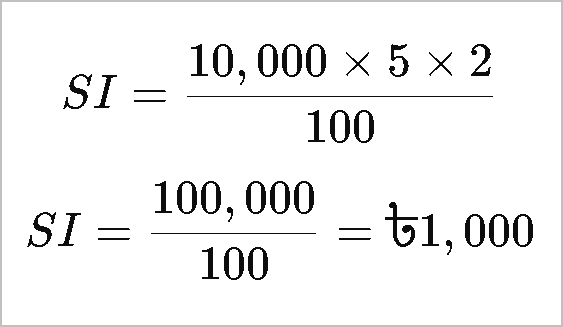
So, the simple interest is ৳1,000.
Total Amount = Principal + Interest
= 10,000 + 1,000 = ৳11,000
This example clearly shows what is interest in a simple savings situation.
Where Simple Interest Is Used
- Short-term loans
- Basic savings accounts
- Educational problems
- Small personal lending
Simple interest helps beginners understand what is interest without complexity.
Compound Interest
What Is Compound Interest?
Compound interest is calculated on the principal plus the previously earned interest. This means interest earns interest.
To truly understand what is interest in real financial growth, compound interest is extremely important.
Formula for Compound Interest
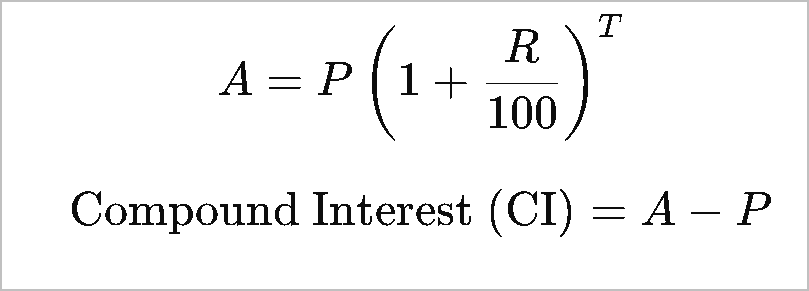
Where:
- A = Final amount
- P = Principal
- R = Rate of interest per year
- T = Time in years
Example of Compound Interest
Example 2:
Ayesha invests ৳10,000 at 10% per year for 2 years. Find the compound interest.
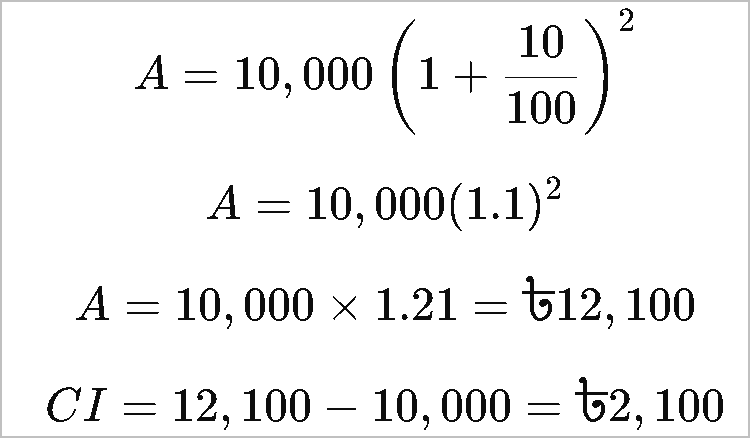
So, the compound interest is ৳2,100.
This shows how interest works more powerfully when interest compounds.
Compound Interest Over Multiple Years
| Year | Amount (৳) |
| 1 | 11,000 |
| 2 | 12,100 |
The interest in the second year is higher because it is calculated on the increased amount. This is a key idea when learning deeply.
Simple Interest vs Compound Interest
| Feature | Simple Interest | Compound Interest |
| Calculation | On principal only | On principal + interest |
| Growth | Linear | Exponential |
| Complexity | Easy | Slightly complex |
| Usage | Short-term | Long-term investments |
This comparison helps students clearly understand what is interest in different contexts.
What Is Interest in Daily Life?
Interest affects daily life more than we often realize.
Bank Savings
Banks pay interest on savings accounts.
Loans and Credit Cards
Borrowers pay interest on home loans, education loans, and credit cards.
Business Investments
Companies earn interest on investments and pay interest on borrowed capital.
Understanding what is interest helps people avoid unnecessary debt and grow wealth wisely.
Factors Affecting Interest
Several factors influence what is interest in real life:
- Rate of Interest – Higher rates mean more interest
- Time Period – Longer time increases interest
- Type of Interest – Simple or compound
- Economic Conditions – Inflation and policies
These factors explain why interest rates vary across banks and countries.
Advantages of Interest
- Encourages saving habits
- Helps money grow over time
- Supports financial planning
- Enables large purchases through loans
Understanding what is interest allows individuals to use these advantages effectively.
Disadvantages of Interest
- High interest can cause debt problems
- Compound interest can increase loan burden
- Poor understanding leads to financial loss
This is why learning what is interest early is very important.
Interest in Education and Exams
The topic interest is commonly taught in:
- Class 6–10 Mathematics
- O-Level and SSC exams
- Competitive exams
Students are expected to know formulas, examples, and real-life applications.
Common Mistakes While Calculating Interest
- Mixing up simple and compound interest
- Using incorrect time units
- Forgetting to subtract principal in compound interest
- Using wrong rate percentages
Avoiding these mistakes helps in mastering interest.
Importance of Understanding What Is Interest
Knowing what is interest helps people:
- Make smart financial decisions
- Choose better savings plans
- Avoid high-interest debt
- Plan long-term investments
It is a life skill, not just a math topic.
Conclusion
In conclusion, interest is a fundamental concept that connects mathematics, economics, and everyday life. Interest represents the cost of borrowing and the reward for saving. Simple interest is easy to calculate and suitable for short-term use, while compound interest plays a powerful role in long-term wealth creation.
By understanding what is interest, its formulas, examples, and applications, students and adults alike can make informed financial choices. Whether saving money or taking a loan, knowledge of interest ensures financial stability and growth.