
Homeostasis Explained: 4 Vital Roles of Osmoreceptors in the Human Body
What Is Homeostasis in Biology?
Homeostasis is the process by which living organisms maintain a stable internal environment despite changes in their external surroundings. This ability is essential for survival because cells function properly only within specific physical and chemical conditions. Through homeostasis, organisms regulate factors such as body temperature, blood glucose concentration, water balance, pH, and oxygen levels.
Many organs, tissues, and specialized receptors work together to maintain homeostasis. Among these specialized receptors, osmoreceptors play a crucial role in regulating the body’s water balance.
Understanding Homeostasis
The term homeostasis comes from Greek words meaning “similar” and “standing still.” It refers to the dynamic processes that keep internal conditions within a narrow range. Although the external environment may change continuously, the body’s internal environment remains relatively constant.
For example, humans maintain a body temperature of approximately 37°C. If body temperature rises or falls significantly, various physiological mechanisms act to restore normal conditions. Similar control systems regulate water levels, blood pressure, and nutrient concentrations.
Homeostasis depends on three main components:
- Receptors that detect changes.
- Control centers that process information.
- Effectors that produce corrective responses.
In water regulation, osmoreceptors serve as important receptors that detect changes in the concentration of dissolved substances in body fluids.
READ: What Is Homeostasis?
Why Homeostasis Is Important
Every biochemical reaction inside cells requires suitable conditions. Without homeostasis, enzymes would not function efficiently, cells could become damaged, and essential physiological processes could fail.
Homeostasis helps organisms:
- Maintain optimal enzyme activity.
- Regulate body temperature.
- Balance water and electrolyte levels.
- Control blood sugar concentration.
- Maintain proper blood pressure.
- Support normal cellular functions.
A disruption of homeostasis can lead to diseases and health complications.
The Role of Water Balance in Homeostasis
Water is one of the most important substances in living organisms. It acts as a solvent, transports nutrients, removes waste products, and participates in numerous biochemical reactions.
Maintaining the correct amount of water is essential. Too much water can dilute body fluids, while too little water can cause dehydration. The body relies on several mechanisms to regulate water balance, including the activity of osmoreceptors.
These specialized receptors continuously monitor the concentration of body fluids and help initiate corrective actions when necessary.
What Are Osmoreceptors?
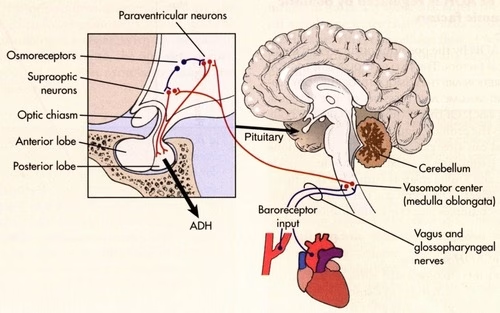
Osmoreceptors are specialized sensory cells that detect changes in the osmotic pressure of body fluids. They are primarily located in the hypothalamus of the brain.
When the concentration of dissolved substances in the blood changes, osmoreceptors respond by sending signals that help regulate water balance. Their primary function is to ensure that the body’s fluid concentration remains within a healthy range.
Because of their sensitivity to changes in blood osmolarity, osmoreceptors are essential components of the homeostatic control system.
How Osmoreceptors Help Maintain Homeostasis
The body constantly loses water through sweating, urination, breathing, and other processes. To compensate for these losses, it must carefully regulate fluid intake and retention.
When dehydration occurs, the concentration of dissolved substances in the blood increases. The osmoreceptors detect this increase and stimulate the release of antidiuretic hormone (ADH) from the pituitary gland.
ADH acts on the kidneys, causing them to reabsorb more water into the bloodstream. As a result, urine becomes more concentrated, and water loss decreases.
Conversely, when excess water is present in the body, osmoreceptors detect the lower concentration of dissolved substances. This reduces ADH release, allowing the kidneys to excrete more water through dilute urine.
Through these mechanisms, osmoreceptors contribute significantly to homeostasis.
Negative Feedback and Homeostasis
Most homeostatic processes operate through negative feedback. In a negative feedback system, a change triggers responses that reverse the original disturbance.
The actions of osmoreceptors provide an excellent example of negative feedback:
- Blood osmolarity increases due to water loss.
- Osmoreceptors detect the change.
- ADH secretion increases.
- The kidneys retain more water.
- Blood osmolarity returns to normal.
Once normal conditions are restored, the corrective response decreases. This prevents excessive adjustments and maintains stability.
Homeostasis in Other Biological Systems
Although water balance is important, homeostasis also regulates many other physiological variables.
Temperature Regulation
Humans maintain a relatively constant body temperature. When body temperature rises, sweating and increased blood flow to the skin help remove excess heat. When body temperature falls, shivering generates additional heat.
Blood Glucose Regulation
The hormones insulin and glucagon regulate blood glucose levels. Insulin lowers blood sugar by promoting glucose uptake by cells, while glucagon increases blood sugar when levels become too low.
pH Regulation
The body carefully controls blood pH because even slight changes can affect cellular function. The respiratory and urinary systems work together to maintain a stable pH.
These systems, along with the actions of osmoreceptors, demonstrate the wide range of processes involved in homeostasis.
Homeostasis in Different Organisms
Homeostasis is not limited to humans. Animals, plants, and even microorganisms possess mechanisms that help maintain internal stability.
Fish regulate salt and water balance in aquatic environments. Desert animals conserve water efficiently to survive harsh conditions. Plants control water loss through structures called stomata.
In many vertebrates, osmoreceptors are critical for monitoring body fluid concentration and coordinating appropriate physiological responses.
Consequences of Homeostatic Failure
When homeostatic mechanisms fail, serious health problems can occur. Dehydration, electrolyte imbalances, heat stroke, and kidney disorders are examples of conditions linked to disrupted homeostasis.
Damage to osmoreceptors or abnormalities in ADH production can interfere with water regulation. Such disruptions may result in excessive thirst, abnormal urine production, or dangerous changes in fluid balance.
Therefore, properly functioning osmoreceptors are essential for maintaining normal physiological conditions.
Conclusion
Homeostasis is the biological process that keeps an organism’s internal environment stable despite external changes. It regulates essential variables such as temperature, blood glucose, pH, and water balance. Specialized receptors, control centers, and effectors work together to achieve this stability.
Among these components, osmoreceptors play a vital role in monitoring the concentration of body fluids and regulating water balance through hormonal control. By detecting changes in osmolarity and initiating corrective responses, osmoreceptors help ensure that cells function under optimal conditions. Their contribution highlights the remarkable precision of the homeostatic mechanisms that support life.