
What Can You Do With a Mechanical Engineering Degree? 25 Exciting Career Paths
Mechanical engineering is one of the most versatile and respected branches of engineering. It combines principles of physics, mathematics, materials science, and design to create machines, systems, and technologies that improve everyday life. If you are considering earning an engineering degree in mechanics, you may wonder about the career opportunities available after graduation.
The good news is that this degree opens doors to a wide range of industries. From aerospace and automotive engineering to renewable energy and robotics, graduates can work on innovative projects that shape the future. Whether you want to design advanced machines, improve manufacturing processes, or develop sustainable technologies, a mechanical engineering degree provides the foundation needed for success.
This article explores what you can do with a mechanical engineering degree, the industries that hire graduates, the skills you gain, and the career paths available after completing your studies.
READ: What Can You Do With a Psychology Degree?
Understanding a Mechanical Engineering Degree
A mechanical engineering degree is an academic qualification that focuses on the design, analysis, manufacturing, and maintenance of mechanical systems. Students learn about thermodynamics, fluid mechanics, mechanics of materials, machine design, control systems, and engineering mathematics.
During a mechanical engineering program, students develop both theoretical knowledge and practical skills. Laboratory work, computer-aided design (CAD), simulations, and engineering projects help students apply classroom concepts to real-world challenges.
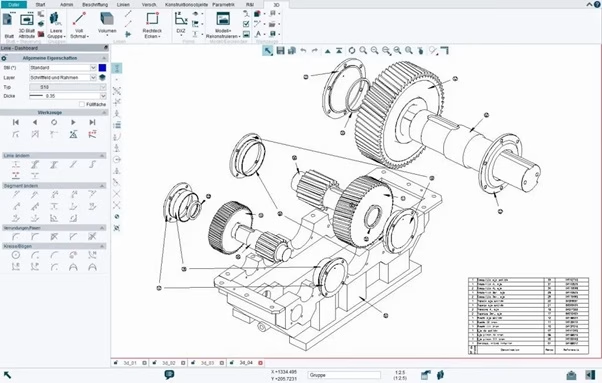
The versatility of this degree is one of its greatest strengths. Unlike highly specialized programs, mechanical engineering provides broad technical training that can be applied across numerous sectors.
Skills You Gain From a Mechanical Engineering Degree
A mechanical engineering degree helps students develop a valuable set of technical and transferable skills.
Technical Skills
Students learn how to:
- Design mechanical systems
- Analyze engineering problems
- Use CAD software
- Conduct engineering simulations
- Understand manufacturing processes
- Apply principles of thermodynamics
- Work with materials and structures
- Develop automation systems
Transferable Skills
In addition to technical expertise, a mechanical engineering degree develops:
- Problem-solving abilities
- Critical thinking
- Project management skills
- Teamwork and collaboration
- Communication skills
- Analytical reasoning
- Time management
- Leadership abilities
These skills make graduates attractive to employers in both engineering and non-engineering fields.
Become a Mechanical Engineer
The most direct path after earning a mechanical engineering degree is becoming a mechanical engineer.
Mechanical engineers design, develop, test, and improve machines and mechanical systems. They work on products ranging from household appliances to industrial machinery and transportation systems.
Typical responsibilities include:
- Designing mechanical components
- Conducting performance tests
- Creating technical drawings
- Improving product efficiency
- Troubleshooting mechanical issues
- Supervising manufacturing processes
A mechanical engineering degree provides the core knowledge required for this profession.
Work in the Automotive Industry
The automotive sector is one of the largest employers of mechanical engineering graduates.
With a mechanical engineering degree, you can contribute to:
- Vehicle design
- Engine development
- Electric vehicle technology
- Safety systems
- Manufacturing processes
- Performance testing
As the industry transitions toward electric and autonomous vehicles, professionals with a mechanical engineering degree play a critical role in developing innovative transportation solutions.
Engineers in this field often work on improving fuel efficiency, reducing emissions, and enhancing vehicle performance.
Enter the Aerospace Industry
The aerospace industry offers exciting opportunities for individuals with a mechanical engineering degree.
Mechanical engineers help design:
- Aircraft systems
- Spacecraft components
- Propulsion systems
- Satellite mechanisms
- Landing gear systems
- Structural components
Professionals in aerospace must ensure that systems operate safely under extreme conditions. A mechanical engineering degree equips graduates with the analytical and technical skills needed for these demanding roles.
Many engineers find aerospace work particularly rewarding because it involves cutting-edge technology and complex engineering challenges.
Pursue a Career in Robotics
Robotics is a rapidly growing field that relies heavily on mechanical engineering expertise.
A mechanical engineering degree can lead to careers involving:
- Robot design
- Automation systems
- Industrial robotics
- Medical robots
- Autonomous machines
- Research and development
Mechanical engineers in robotics focus on designing moving parts, mechanical structures, and motion systems. They often collaborate with software and electrical engineers to create fully functional robotic systems.
As automation continues to expand globally, demand for professionals with a mechanical engineering degree is expected to remain strong.
Work in Manufacturing
Manufacturing remains one of the most important career destinations for graduates with a mechanical engineering degree.
Engineers in manufacturing help improve:
- Production efficiency
- Product quality
- Equipment performance
- Factory automation
- Supply chain processes
- Cost reduction strategies
A mechanical engineering degree provides knowledge of production methods, materials, and machinery that can help organizations optimize operations.
Manufacturing careers often offer opportunities to work with advanced technologies such as industrial robots, smart factories, and digital manufacturing systems.
Join the Renewable Energy Sector
Renewable energy is becoming increasingly important worldwide.
A mechanical engineering degree can help you enter careers related to:
- Wind turbines
- Solar energy systems
- Hydroelectric power
- Energy storage technologies
- Sustainable engineering solutions
Mechanical engineers contribute to the design, maintenance, and optimization of renewable energy systems.
As governments and businesses invest in cleaner energy sources, graduates with a mechanical engineering degree are finding more opportunities in this expanding sector.
Work in the Oil and Gas Industry
Despite growth in renewable energy, the oil and gas sector continues to employ many mechanical engineers.
Professionals with a mechanical engineering degree may work on:
- Drilling equipment
- Pipeline systems
- Offshore platforms
- Refinery operations
- Mechanical maintenance
- Safety systems
These positions often involve solving complex engineering problems and managing large-scale industrial equipment.
The technical training provided by a mechanical engineering degree makes graduates well-suited for these responsibilities.
Become a Design Engineer
Design engineering is a popular career path for those who enjoy creativity and innovation.
A mechanical engineering degree prepares graduates to create products ranging from consumer electronics to industrial machinery.
Design engineers typically:
- Develop concepts
- Create CAD models
- Perform simulations
- Test prototypes
- Improve product functionality
- Ensure manufacturability
This role combines technical knowledge with creative thinking, making it attractive to many graduates.
Work in Research and Development
Research and development careers allow engineers to explore new technologies and innovations.
With a mechanical engineering degree, you can contribute to:
- Product innovation
- Material development
- Energy solutions
- Robotics research
- Aerospace advancements
- Manufacturing technologies
Research positions often exist within universities, government laboratories, and private companies.
A mechanical engineering degree provides the analytical foundation needed to investigate complex technical challenges.
Become a Project Engineer
Project engineering combines technical expertise with management responsibilities.
Professionals with a mechanical engineering degree often oversee engineering projects by:
- Coordinating teams
- Managing schedules
- Controlling budgets
- Ensuring quality standards
- Communicating with stakeholders
- Monitoring project progress
This role is ideal for individuals who enjoy leadership and organization while maintaining a technical focus.
Enter the Construction Industry
Construction companies frequently hire graduates with a mechanical engineering degree.
Mechanical engineers contribute to:
- Building systems
- HVAC design
- Plumbing systems
- Fire protection systems
- Energy management
- Infrastructure projects
These professionals help ensure that buildings operate efficiently and safely.
A mechanical engineering degree provides the knowledge needed to design and maintain mechanical systems within residential, commercial, and industrial structures.
Specialize in HVAC Engineering
HVAC stands for heating, ventilation, and air conditioning.
A mechanical engineering degree is one of the most common qualifications for entering this field.
HVAC engineers work on:
- Climate control systems
- Indoor air quality
- Energy-efficient buildings
- Refrigeration systems
- Industrial cooling systems
As energy efficiency becomes increasingly important, HVAC professionals continue to play a vital role in modern building design.
Work in Biomedical Engineering
Healthcare technology presents another exciting opportunity for graduates with a mechanical engineering degree.
Mechanical engineers contribute to the development of:
- Medical devices
- Prosthetic limbs
- Surgical equipment
- Rehabilitation technologies
- Diagnostic systems

This field combines engineering principles with medical science to improve patient care and quality of life.
A mechanical engineering degree provides valuable skills that can be adapted to biomedical applications.
READ: What Can You Do With a Biology Degree?
Become a Quality Engineer
Quality engineers ensure that products meet performance and safety standards.
A mechanical engineering degree can lead to roles involving:
- Product inspections
- Process improvement
- Statistical analysis
- Quality control systems
- Regulatory compliance
- Failure investigations
Organizations across many industries rely on quality engineers to maintain high standards and customer satisfaction.
Work in Mechatronics
Mechatronics combines mechanical engineering, electronics, and computer systems.
Graduates with a mechanical engineering degree often pursue careers involving:
- Automated systems
- Smart manufacturing
- Robotics integration
- Sensor technologies
- Control systems
This interdisciplinary field continues to grow as industries adopt more advanced automation technologies.
Become a Maintenance Engineer
Maintenance engineers help ensure that machinery and equipment operate reliably.
A mechanical engineering degree prepares professionals to:
- Diagnose equipment problems
- Develop maintenance schedules
- Improve system reliability
- Reduce downtime
- Enhance operational efficiency
Industries such as manufacturing, energy, transportation, and mining often employ maintenance engineers.
Pursue Engineering Consulting
Engineering consulting offers diverse and challenging work.
Consultants with a mechanical engineering degree provide expertise in areas such as:
- System design
- Energy efficiency
- Equipment selection
- Risk assessment
- Technical analysis
- Project planning
Consulting careers often involve working with multiple clients across different industries, providing variety and professional growth.
Work in Government Agencies
Government organizations hire individuals with a mechanical engineering degree for technical and regulatory roles.
Possible responsibilities include:
- Infrastructure development
- Public transportation projects
- Energy policy implementation
- Environmental programs
- Technical inspections
- Engineering oversight
These positions allow engineers to contribute to public services and national development initiatives.
Become an Entrepreneur
A mechanical engineering degree can also support entrepreneurship.
Many graduates launch businesses related to:
- Product development
- Manufacturing
- Engineering consulting
- Technology innovation
- Industrial services
The technical and problem-solving skills gained through a mechanical engineering degree can help entrepreneurs identify opportunities and develop practical solutions.
Continue Your Education
After earning a mechanical engineering degree, many graduates choose to pursue advanced education.
Options include:
- Master’s programs
- Doctoral research
- Specialized certifications
- Professional engineering licenses
- Business administration programs
Additional qualifications can enhance career opportunities and lead to leadership positions.
A higher-level degree may also allow engineers to specialize in fields such as aerospace, robotics, renewable energy, or advanced manufacturing.
Non-Engineering Careers
Interestingly, a mechanical engineering degree can also open doors beyond traditional engineering roles.
Graduates often enter fields such as:
- Finance
- Technology management
- Sales engineering
- Data analysis
- Operations management
- Supply chain management
Employers value the analytical and problem-solving skills developed through a mechanical engineering degree, even in non-technical positions.
READ: What Can You Do With an Economics Degree?
Salary Potential
One reason many students pursue a mechanical engineering degree is the strong earning potential.
Salaries vary depending on factors such as:
- Geographic location
- Industry
- Experience level
- Educational background
- Professional certifications
Generally, a mechanical engineering degree provides access to competitive compensation and long-term career growth.
Professionals who gain specialized expertise or move into management positions often see substantial increases in earnings over time.
Future Job Outlook
The future remains promising for graduates with a mechanical engineering degree.
Emerging technologies are creating demand in areas such as:
- Artificial intelligence integration
- Advanced manufacturing
- Electric vehicles
- Renewable energy
- Smart infrastructure
- Robotics
- Sustainable engineering
Because mechanical engineering principles apply across numerous industries, graduates often enjoy greater career flexibility than many other professionals.
A mechanical engineering degree also provides adaptability, allowing individuals to transition between industries as market demands change.
How to Maximize Your Degree
To get the most value from a mechanical engineering degree, students should focus on developing both technical and professional skills.
Helpful strategies include:
- Completing internships
- Participating in engineering projects
- Learning CAD software
- Developing programming skills
- Joining engineering organizations
- Building professional networks
- Pursuing certifications
- Staying informed about industry trends
Employers often seek candidates who combine academic knowledge with practical experience.
Conclusion
A mechanical engineering degree is one of the most versatile qualifications available in the engineering world. It provides a strong foundation in design, analysis, manufacturing, and problem-solving while offering access to careers across numerous industries.
Whether you want to design aircraft, develop robots, improve renewable energy systems, optimize manufacturing operations, or launch your own business, a mechanical engineering degree can help you achieve those goals. The broad technical knowledge and transferable skills gained through this educational path make graduates valuable in both engineering and non-engineering professions.
As technology continues to evolve, the opportunities associated with a mechanical engineering degree are likely to expand even further. From traditional industries to emerging fields, this qualification offers a pathway to innovation, professional growth, and meaningful contributions to society. For students seeking a flexible and rewarding career, a mechanical engineering degree remains an excellent choice.